
When determining how much to charge for a biohazard cleanup, you must analyze several key factors. The type of contamination, the extent of the cleanup, and the necessary safety protocols all play an important role. Additionally, labor costs can vary considerably based on the complexity of the situation. Understanding these variables is essential, but there’s more to take into account that could greatly influence your pricing strategy.
Understanding Biohazard Cleanup Costs
When you need biohazard cleanup, understanding the associated costs is important, as they can vary widely based on the situation’s severity and complexity. Typically, costs range from $1,500 to $25,000, influenced by factors like the type of contamination and required cleanup certifications. Services usually include hazardous material removal, sanitization, and odor management, with hourly rates fluctuating between $25 and $600. It’s essential to stay informed about biohazard regulations that govern cleanup procedures, as compliance affects pricing. Additionally, industry providers may offer varying quotes, making it important to compare options to guarantee competitive rates. Always consider insurance coverage, as many homeowners’ policies contribute to biohazard cleanup expenses, alleviating some financial burdens.
Factors Influencing Pricing
Understanding the factors influencing biohazard cleanup pricing is essential for making informed decisions. The type and risk level of contamination dictate necessary safety protocols and cleanup complexity, greatly affecting costs. For instance, handling high-risk pathogens requires specialized equipment and strict safety measures, which can escalate labor rates from $25 to $600 per hour. The size and extent of the affected area also play a vital role; larger spaces and deeper contamination increase labor and disposal fees. Additionally, the level of professional certification impacts pricing, with higher-trained teams ensuring compliance and thoroughness, albeit at a higher cost. Finally, adherence to regulatory compliance for disposal adds further expenses, emphasizing the importance of these factors in determining overall cleanup pricing.
Common Types of Biohazard Cleanup Services
Pricing for biohazard cleanup services varies markedly based on the specific type of contamination involved. Blood cleanup is essential in crime scenes, requiring the removal of bodily fluids and adherence to strict safety protocols to prevent pathogen exposure. In hoarding situations, professionals tackle accumulated waste, including animal waste, mold, and decayed food, necessitating a sensitive, multifaceted approach. Death and decomposition cleanup involves managing hazardous bacteria and odors from unattended deaths, while crime scene cleanup must maintain chain-of-evidence protocols. Each service requires specialized training, protective equipment, and meticulous sanitation processes to guarantee safety and compliance. Understanding these common types helps you gauge the complexity and potential costs associated with biohazard cleanup.
Pricing Models in the Industry
As you navigate the biohazard cleanup industry, you’ll encounter various pricing models tailored to different service needs and complexities. Hourly rates typically range from $75 to $250, influenced by technician experience and the biosafety level of the situation. For lower-risk scenarios, rates start around $25 to $50 per hour, while high-risk scenarios can escalate to $150 to $600 per hour. Alternatively, flat fees are common for specific cleanups—like trauma scenes—ranging from $1,000 to $10,000. This model provides clients with clear cost expectations for defined jobs. Understanding these pricing structures is essential, as they accommodate varying contamination levels and cleanup complexities, ensuring you can effectively estimate costs for your services.
Special Considerations for Cost Estimation
When estimating costs for biohazard cleaning, several special considerations come into play that can greatly influence your final pricing. First, conduct a thorough hazard assessment. The type and severity of contamination—like bloodborne pathogens or chemical residues—dictate the complexity of your cleanup protocols. Larger areas require more labor and materials, escalating costs. Access challenges, such as tight spaces or clutter, can slow progress and necessitate additional resources. Furthermore, compliance with safety regulations and the need for enhanced PPE and specialized equipment further increase your expenses. Finally, the urgency of the response can affect pricing; emergency services typically carry premium rates. Each factor must be meticulously evaluated to provide an accurate estimate for your biohazard cleaning service.
Insurance and Its Impact on Pricing
Understanding the nuances of insurance coverage is vital for accurately estimating costs associated with biohazard cleanup. Homeowner’s and commercial insurance policies may cover various biohazard situations, but you must be aware of potential insurance exclusions and coverage limitations. These factors heavily influence the scope and pricing of cleanup services, as insurers dictate allowable expenses. You might find that some insurers require upfront payment or impose deductibles, affecting your out-of-pocket costs. Furthermore, detailed documentation, including itemized invoices and photographic evidence, is essential for justifying claims and securing reimbursement. Being an approved vendor can further impact pricing, as insurers may negotiate discounted rates, ultimately shaping how much you can charge for your services.
Frequently Asked Questions
What Qualifications Should Biohazard Cleanup Technicians Have?
Biohazard cleanup technicians need relevant certification requirements, including OSHA Bloodborne Pathogens and HAZWOPER certifications. Additionally, technician training should cover PPE usage, emergency response, and decontamination procedures for effective and safe handling of hazardous materials.
How Long Does a Typical Biohazard Cleanup Take?
A typical biohazard cleanup takes hours to several days, depending on project complexity. Smaller spills may require 2–4 hours, while extensive incidents, like unattended deaths, often last 24–72 hours, plus verification time.
Can Property Owners Perform Their Own Biohazard Cleanup?
You can’t perform DIY cleanup due to legal implications. Regulations require trained professionals for safe handling, disposal, and compliance with health codes, ensuring your safety and minimizing exposure to hazardous materials and potential liabilities.
What Safety Measures Are Taken During Biohazard Cleanup?
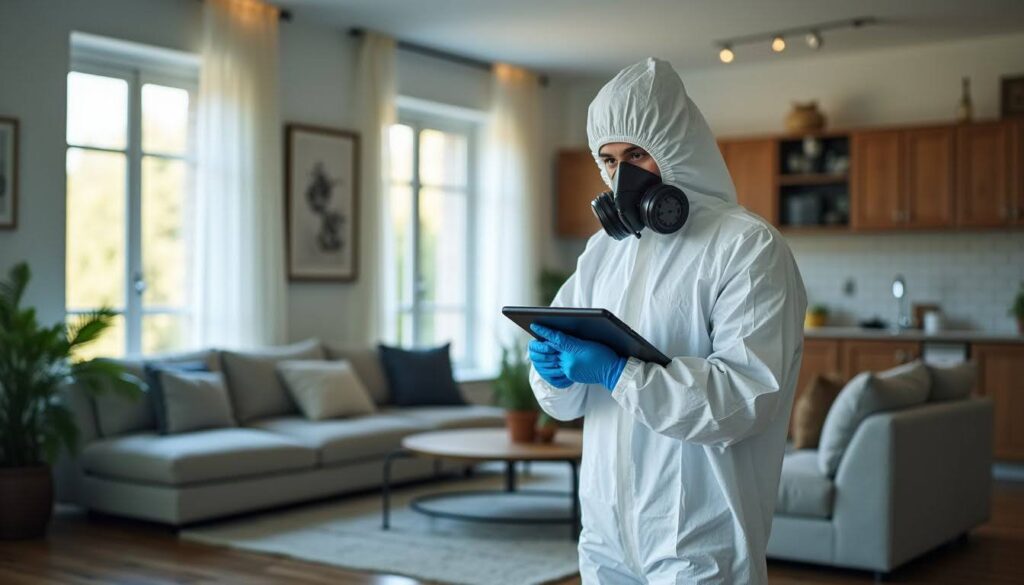
During biohazard cleanup, you’ll wear protective equipment, including gloves and respirators. You’ll follow strict decontamination procedures, using specialized tools for removal, ensuring safe disposal, and applying disinfectants to neutralize any contaminants effectively.
Are There Any Warranties for Biohazard Cleanup Services?
Yes, many biohazard cleanup services offer warranty coverage and service guarantees. These guarantee satisfaction, compliance with regulations, and may include re-cleaning if contaminants are detected post-service, providing you peace of mind regarding the cleanup’s effectiveness.


